
Start with the general daily baseline: about 125 oz (3.7 liters) of total water a day for men and 91 oz (2.7 liters) for women, with roughly 20% of that coming from food. Take out the food, and that's roughly 100 oz (3 liters) of drinks a day for men and 73 oz (2.2 liters) for women. Then add back what you sweat on your runs. Every pound you lose on a run is about 16 ounces of sweat. During runs, start with 16–32 oz of water per hour with 600–800 mg of sodium per liter, and adjust from there.
In August 2026, I ran the Habanero 100. The temperatures were over 100°, and the feels-like temperature peaked at 112°. I was drinking at least 40 to 48 oz of water per hour, which was a record high for me but totally necessary. I didn't get dehydrated despite the super high temperatures and went on to finish the race in third place, in 21:28:05.
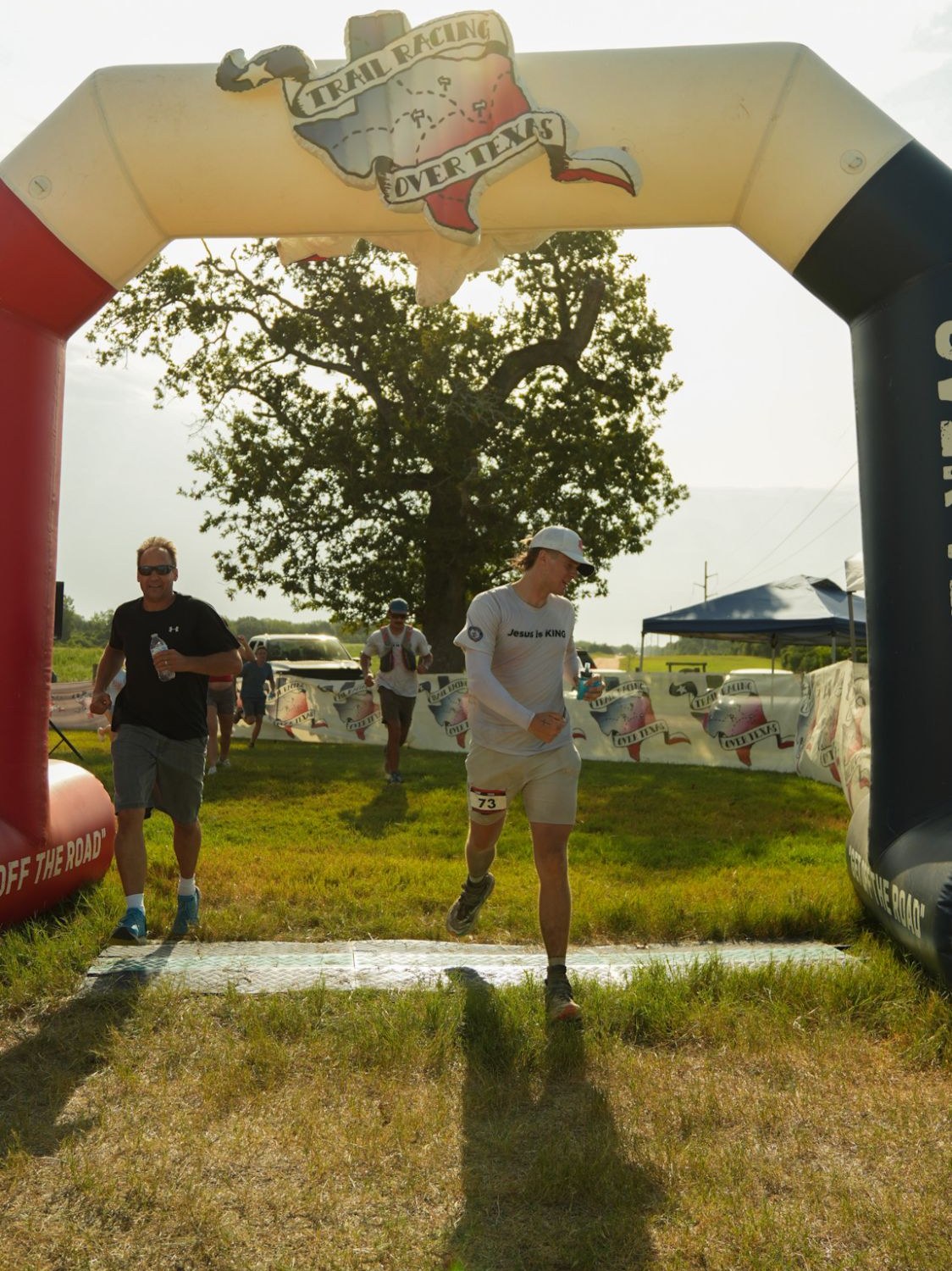
It wasn't always that way. At my first 100-mile race, the Keys 100 in May 2022, it was 90+ degrees, and I overheated because I didn't have a way to carry ice.
Why it matters
The American College of Sports Medicine says the goal of drinking during exercise is to prevent losing more than 2% of your body weight to dehydration, because that's when your performance starts to suffer. For a 180-pound runner, that's about 3.6 pounds. Sweat it out and don't replace it, and you also raise your risk of heat illness.
But more isn't always better. Drinking too much, especially plain water without sodium, can lead to hyponatremia, or low blood sodium. Jason Koop, head ultrarunning coach at CTS, warns that replacing 100% of your sweat loss in an ultra can cause it.
So the goal isn't to drink as much as you can. It's to drink close to what you lose.
How much water to drink a day
The National Academies set a general daily baseline of about 125 oz (3.7 liters) for men and 91 oz (2.7 liters) for women. That counts everything: water, other drinks and the water in your food, which makes up roughly 20%. So from drinks alone, that's closer to 100 oz for men and 73 oz for women.
That baseline is for the average adult. If you're training for a marathon or an ultra, you need more, because you're losing water every time you run. The easiest way to know how much more is to weigh yourself before and after a run. Every pound you lose is about 16 ounces of sweat, and that's what you need to drink back on top of your baseline.
When I am running a lot, my goal is to drink about a gallon of water a day (128 oz), but if not that, at least 100 oz. Every morning, I start my day with a large glass of water with Switchback electrolytes.
Carb loading changes things too. Your body stores water along with every gram of glycogen, so you'll probably feel a little heavier and see the scale go up a bit. That's the point. It's fuel, not fat. Here's exactly how I carb load.
How much to drink before a run
The ACSM says to start your run already hydrated, and to drink several hours before so your body has time to absorb it and get rid of what it doesn't need. Chugging a bottle at the start line doesn't do much except send you to the porta-potty.
Before a race, don't overload on plain water in the days and hours leading up to it. CTS coach Cliff Pittman recommends a strong electrolyte drink about two hours before the start to help your body hold on to the fluid.
How much to drink during a run

- Fluid: 16–32 oz per hour
- Sodium: 600–800 mg per liter of fluid
- Calories: 200–300 per hour
That's the same starting point Jason Koop uses for every athlete he coaches: 16–32 oz of fluid per hour and 600–800 mg of sodium per 32 oz. Then he adjusts it for each athlete based on their goals and race.
In the heat, your number can go way up. At Habanero, I was drinking at least 40 to 48 oz of water per hour.
If you finish runs with white salt streaks on your hat or shirt, you're probably a salty sweater and should aim for the top of that sodium range. A sweat test is the best way to find your exact number.
Don't just drink when you're thirsty. Koop says ultrarunners shouldn't solely "drink to thirst." Heat, altitude, distance and intensity all mess with how thirsty you feel, and late in a race, when you're tired, it's hard to tell. Have a plan and drink on a schedule.
Practice it on your long runs so you're not trying to figure it out on race day. Your gut is trained just like your legs.
How to find your number
You can get an idea of your sweat rate without paying for a test: weigh yourself before and after a one-hour run, and add back whatever you drank. Every pound you lose is about 16 ounces of sweat. Here's exactly how to calculate your sweat rate.
But it makes a big difference when you can actually do a real sweat test, which measures how much sodium you lose. I highly recommend it. It takes the guesswork out of your hydration and electrolytes.
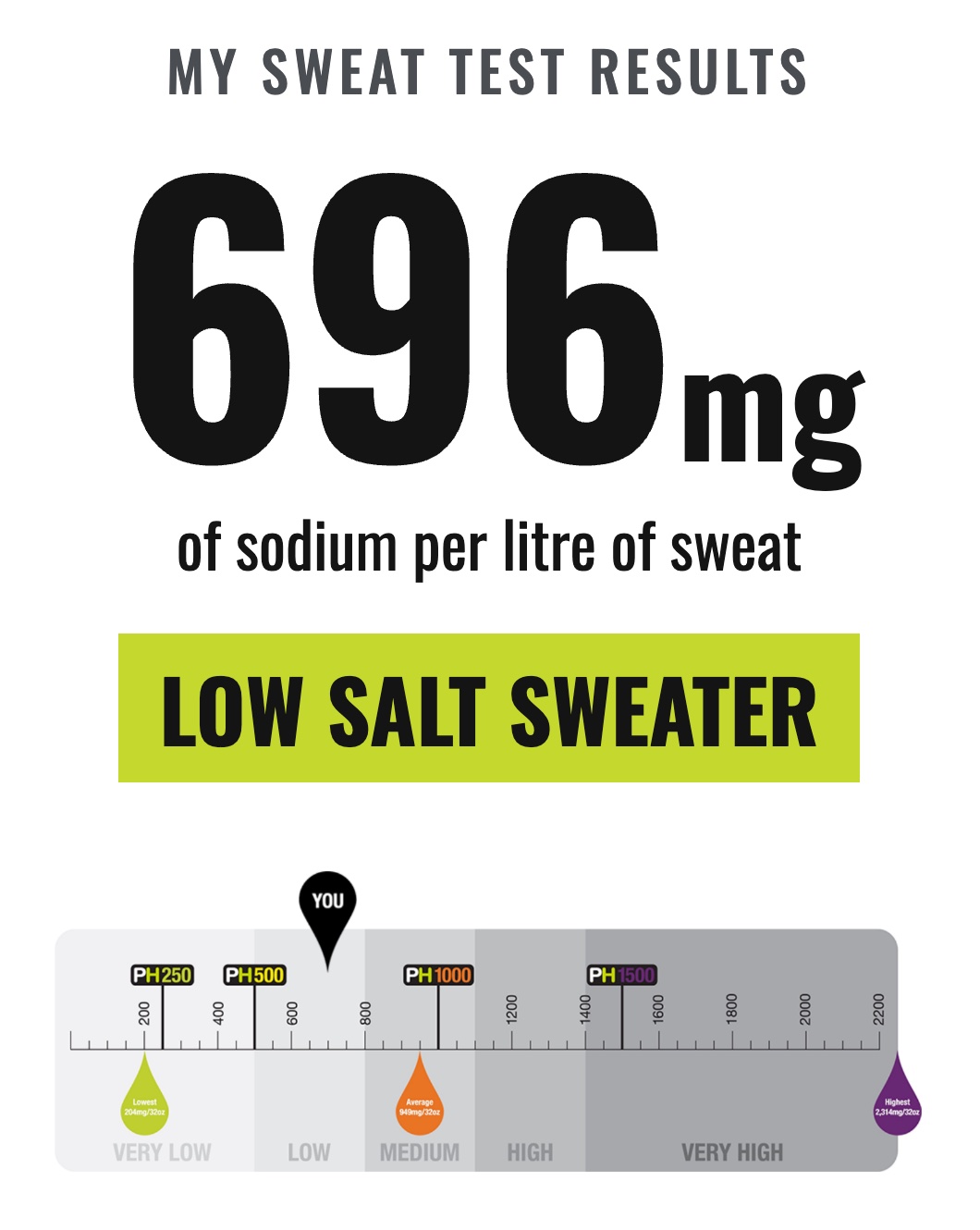
I did a Precision Hydration sweat test in March 2024. I lose 696 mg of sodium per liter of sweat, which makes me a low salt sweater.
At a glance
| When | How much |
|---|---|
| Every day (baseline) | About 125 oz (3.7 L) total for men, 91 oz (2.7 L) for women, about 20% from food |
| On training days | Add back your sweat: about 16 oz for every pound you lose on a run. When I'm running a lot, I aim for about a gallon a day, and at least 100 oz |
| Before a run | Start hydrated. Drink several hours before, not all at the start line |
| During a run | Start at 16–32 oz per hour, with 600–800 mg of sodium per liter. In extreme heat, it can be 40–48 oz |
| The limit | Don't lose more than about 2% of your body weight, and don't finish heavier than you started |
I coach people to their first marathon and their first 100, fueling and hydration included. I'll build the plan around your life and be in your corner all the way to the finish line.
Apply for coachingKeep reading
- What to eat during a long run
- What I wish I'd known before my first 100
- Marathon fueling plan: how I fueled to run a 2:51
- 100-mile race gear checklist
Common questions
How much water should a runner drink a day?
Start with the general baseline of about 125 oz (3.7 liters) of total water a day for men and 91 oz (2.7 liters) for women, with roughly 20% coming from food. Then add back what you sweat on your runs: about 16 oz for every pound you lose. When I'm running a lot, I aim for about a gallon a day, and at least 100 oz.
How much water should I drink during a run?
Start with 16–32 oz per hour, with 600–800 mg of sodium per liter of fluid, and adjust based on your sweat rate and the conditions.
Should I just drink when I'm thirsty?
Not in an ultra. Heat, altitude, distance and intensity all change how thirsty you feel, and late in a race it's hard to tell. Have a plan and drink on a schedule.
Can you drink too much water while running?
Yes. Drinking more than you sweat, especially plain water without sodium, can lead to hyponatremia, or low blood sodium. Aim to drink close to what you lose, not more.
How do I know my sweat rate?
Weigh yourself before and after a one-hour run, and add back whatever you drank. Every pound you lose is about 16 ounces of sweat. A lab sweat test will also tell you how much sodium you lose.
Sources: ACSM position stand, Exercise and Fluid Replacement (2007); Jason Koop, CTS; Jason Koop on the ISSN position stand; Cliff Pittman, CTS; National Academies dietary reference intakes for water (2005).