For your first 100-miler you need: shoes you've tested in training, toe socks, a hydration vest that carries 1.5–2 liters, the gels and electrolytes you trained with, layers for the night, a headlamp plus a backup, anti-chafe balm and a small blister kit. Then read your race's mandatory gear list and add anything on it. Everything else is a nice-to-have.
Product links open in a new tab. A couple are discount or affiliate links (Salty Britches and Hny+). I only recommend gear I actually use.
I've finished seven 100-milers, including Leadville twice, and three 200-milers: the Tahoe 200, the Bigfoot 200 and the Moab 240. But my first 100 looked nothing like that.
The 5 pieces of gear I wish I'd had at my first 100
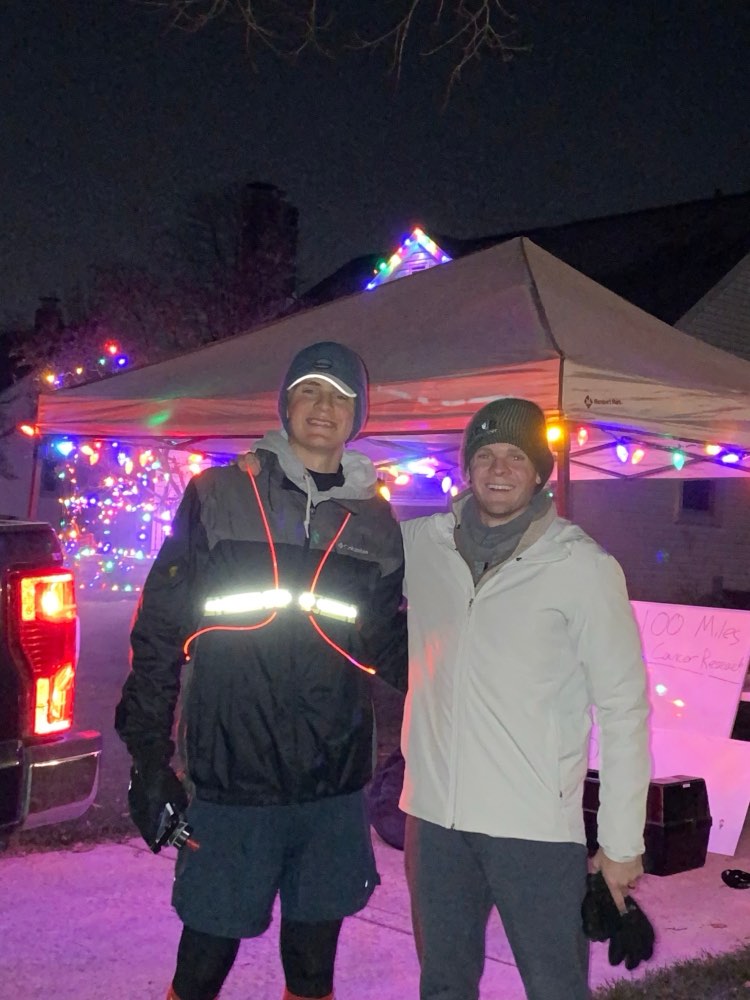
I didn't have a coach. I had absolutely no clue what I was doing. So I mapped out a 1-mile loop around my neighborhood and decided I was just going to run 100 miles. It was all road, with no trail, no elevation and nothing technical. Here's what I wish I'd had that day:
1. Anti-chafe balm (Salty Britches)
Chafing can seriously take you out of a race. Before you start, tape or lube your crotch, armpits and feet. I use Salty Britches chafing ointment.
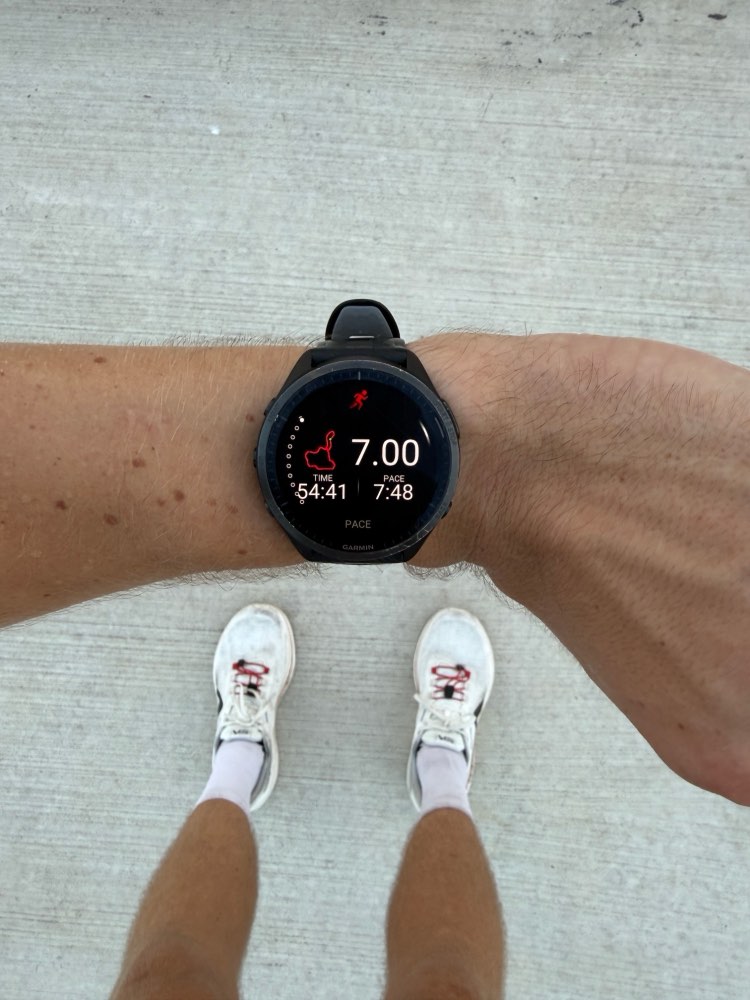
2. A GPS watch with 24+ hours of battery
I used an Apple Watch at the time, and it died mid-race. Now I use a Garmin, and it lasts me the entire race. Whatever you wear, make sure the battery outlasts your finish time.
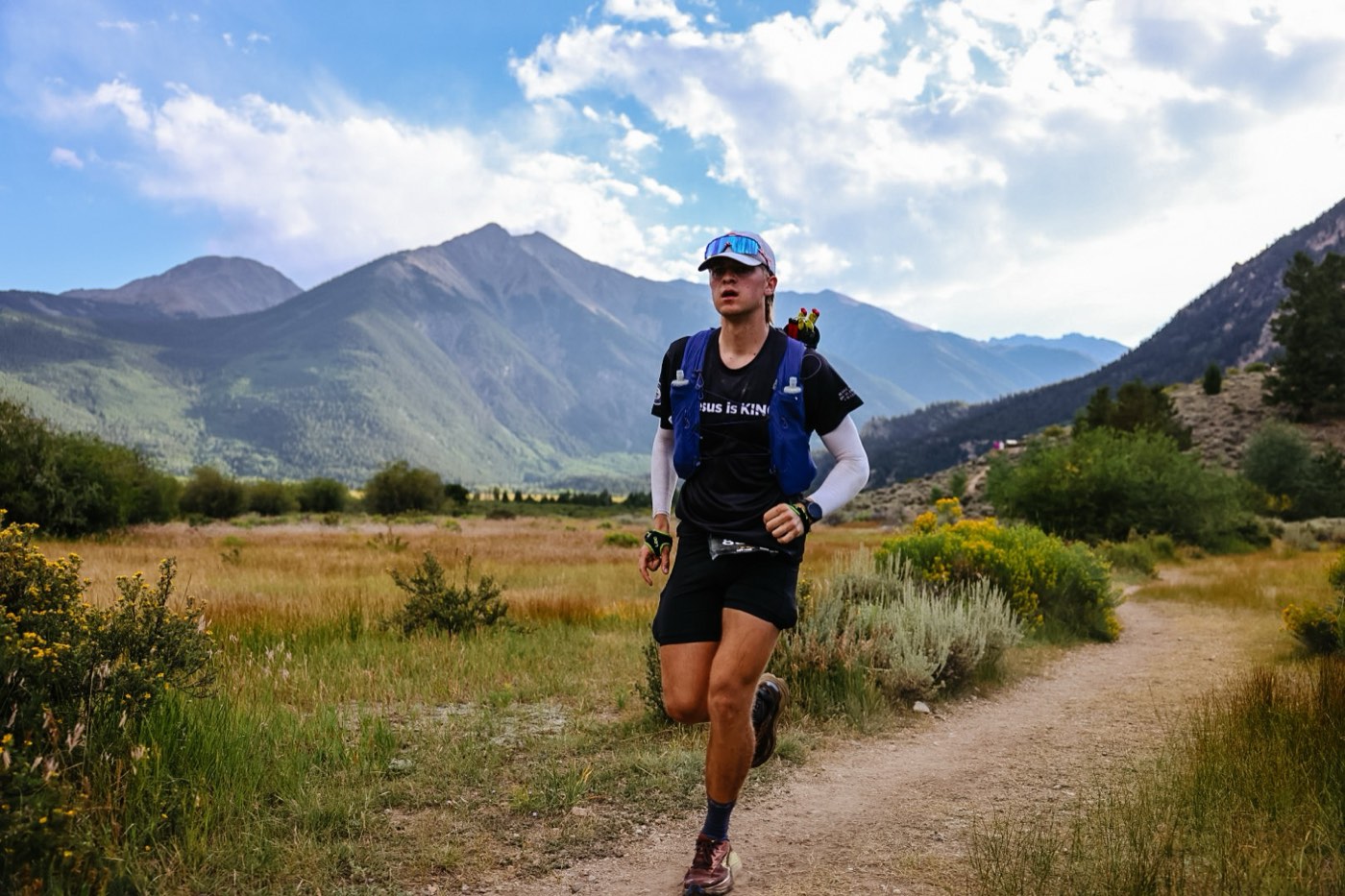
3. A vest that doesn't bounce (Salomon ADV Skin 12)
Personally, I don't like carrying bottles. The Salomon ADV Skin 12 is the best vest I've found that doesn't bounce around.
4. Toe socks
Toe socks look really weird, but they'll seriously protect your toes and prevent blisters.
5. A reliable headlamp (Petzl NAO RL)
I've had so many issues with headlamps dying. The Petzl NAO RL is the most reliable one I've found, and it has a long battery life.
The full gear list
This is the gear list I give every athlete I coach before their first 100. The point is simple: have the right gear so you can feel confident, stay safe, and spend race day covering distance instead of fixing problems you could have prevented.
One rule before the list: test everything in training. Race day is not the day to try new shoes, a new vest or a new gel. And not all of this applies to every race. Temperature, terrain and road versus trail all change what you need.
Shoes, socks and running gear
- Trail running shoes. Prioritize grip, comfort and foot protection, and put real miles on them in training. Two I recommend: Speedland and the Hoka Speedgoat. On a road course, wear road shoes.
- A second pair of shoes. Feet swell over 100 miles. Have a backup pair in your drop bag or with your crew.
- Toe socks, and several pairs. Moisture-wicking and blister-resistant. Injinji and Feetures both work.
- Gaiters. They keep dirt and rocks out of your shoes. Altra Trail Gaiters are a good option.
- Hat, buff or ice bandana. For sun protection and cooling. A bucket hat, a buff, or an ice bandana on hot days.
- Sunglasses. Polarized and stable on the trail, so they don't bounce.
- GPS watch. You need 24+ hours of battery life and breadcrumb navigation, like the Garmin Forerunner, Garmin Fenix or Coros Vertix. Load the course GPX file before race day.
Hydration vest and bottles
- Running vest. High capacity, with room for fluids, fuel, your headlamp and layers. I use the Salomon ADV Skin 12.
- Soft flasks or a bladder. A minimum of 1.5 to 2 liters. Know how far apart your race's aid stations are and carry enough to get between them. Extra Salomon flasks are sold on their website.
- Handheld bottle (optional). For quick access and backup hydration.
Fueling and nutrition
Bring what you trained with. Your gut is trained just like your legs, and race day is the wrong time to find out a new gel doesn't agree with you.
- Gels, bars and chews. Brands my athletes use: Maurten, Date Fix, Hny+, Precision Fuel, CARBS and Honey Stinger.
- Caffeinated gels for the night. Maurten makes a good one. Save them for the overnight hours.
- Liquid carbs you've tested.
- Electrolyte mix or salt pills. I like Switchback.
- Real food. PB&Js, boiled potatoes, trail mix, waffles. Whatever you tolerate on long efforts. After hours of gels, real food matters.
Clothing and layers
A 100-miler goes from afternoon heat to cold, dark hours and back again. Plan for the whole range.
- Moisture-wicking shirt and shorts. Lightweight and chafe-resistant.
- Arm sleeves or a light jacket. Temperature control without the bulk.
- Rain shell or windbreaker. Lightweight but waterproof.
- Warm base layer. For the coldest hours.
- Gloves, buff and beanie. For cold weather or running overnight.
Night and safety gear
Check your race rules first. Many races have a mandatory gear list, and they will check it.
- Headlamp, plus a backup. This is a must-have. I use the Petzl NAO RL. Start with a full battery, and carry an extra battery or a second headlamp.
- Battery bank. To recharge your watch, phone and headlamp.
- Emergency blanket or bivvy. Required at many ultras.
- Trekking poles. If they're allowed, they're great for mountain races.
- Route map or GPX file loaded on your watch.
Foot and body care
- Anti-chafe balm. I use Salty Britches. Apply it to your crotch, armpits and feet before the start, or tape those spots.
- Blister kit. Leuko tape, toe sleeves, alcohol wipes and small scissors.
- Wet wipes. For when duty calls and there's no bathroom nearby.
- Nail clippers or a file. Trim your toenails before the race, not during it.
Nice-to-haves
- Crew cheat sheet. An aid station checklist so your crew knows exactly what to hand you.
- Pre-race fuel. A bagel, oatmeal and coffee.
- Post-race recovery bag. Flip-flops, warm clothes, a protein drink and a towel.
- Recovery tools. A foam roller, massage gun or compression boots.
In my done-for-you coaching, I pick, size and ship your gear for you: shoes, socks, vest, poles, gels and fueling, all matched to your race. You show up and run.
See if you qualifyPrintable 100-mile gear checklist
Print this or screenshot it, then tick things off as you pack. Skip anything that doesn't apply to your race's weather or terrain.
Clothing
- Hat
- Sunglasses
- Gloves
- Buff
- Beanie
- Neck gaiter (if needed)
- Moisture-wicking shirt
- Moisture-wicking shorts
- Rain jacket
- Warm base layer
- Several pairs of running socks
Gear
- Running watch (GPX loaded)
- Trekking poles
- Hydration vest
- Hydration bottles
- Road or trail shoes
- Extra pair of shoes
- Gaiters
- Headlamp
- Extra battery or headlamp
- Emergency bivvy
- Chafing balm
- Wet wipes
Fueling
- Preferred gels
- Caffeinated gels
- Real food or bars
- Preferred liquid carbs
- Salt pills or electrolyte mix
Common questions
What gear do you need for a 100-mile race?
At minimum: tested shoes, toe socks, a vest with 1.5–2 liters of capacity, your tested gels and electrolytes, layers for the night, a headlamp plus a backup, anti-chafe balm and a blister kit. Then check your race's mandatory gear list.
How much water should you carry?
Plan on at least 1.5 to 2 liters, then adjust based on your race's aid station spacing and the weather.
Do you need a headlamp?
Yes. Almost every 100-miler runs through the night. Bring a full battery and a backup.
What's the best headlamp for a 100-mile race?
I use the Petzl NAO RL. After having headlamps die on me, it's the most reliable one I've found, with long battery life. Carry a backup either way.
Can you use an Apple Watch for a 100-mile race?
I wouldn't. Mine died mid-race at my first 100. Use a GPS watch with 24+ hours of battery, like a Garmin.
Do you need trekking poles?
For mountain races with real climbing, they're a big help if the race allows them. On flat or road courses, leave them at home.
Should you bring an extra pair of shoes?
Yes. Pack a second pair and several pairs of socks in your drop bag or with your crew.
Next, read how to train for your first 100-mile race while working full time.