Weigh yourself nude before a one-hour run, then towel off and weigh yourself again after. Add back whatever you drank. Every pound you lose is about 16 ounces of sweat, and that's your hourly sweat rate. Aim to drink back about 90–95% of it, not 100%, and repeat the test in different temperatures. To dial in your sodium, get a real sweat test.
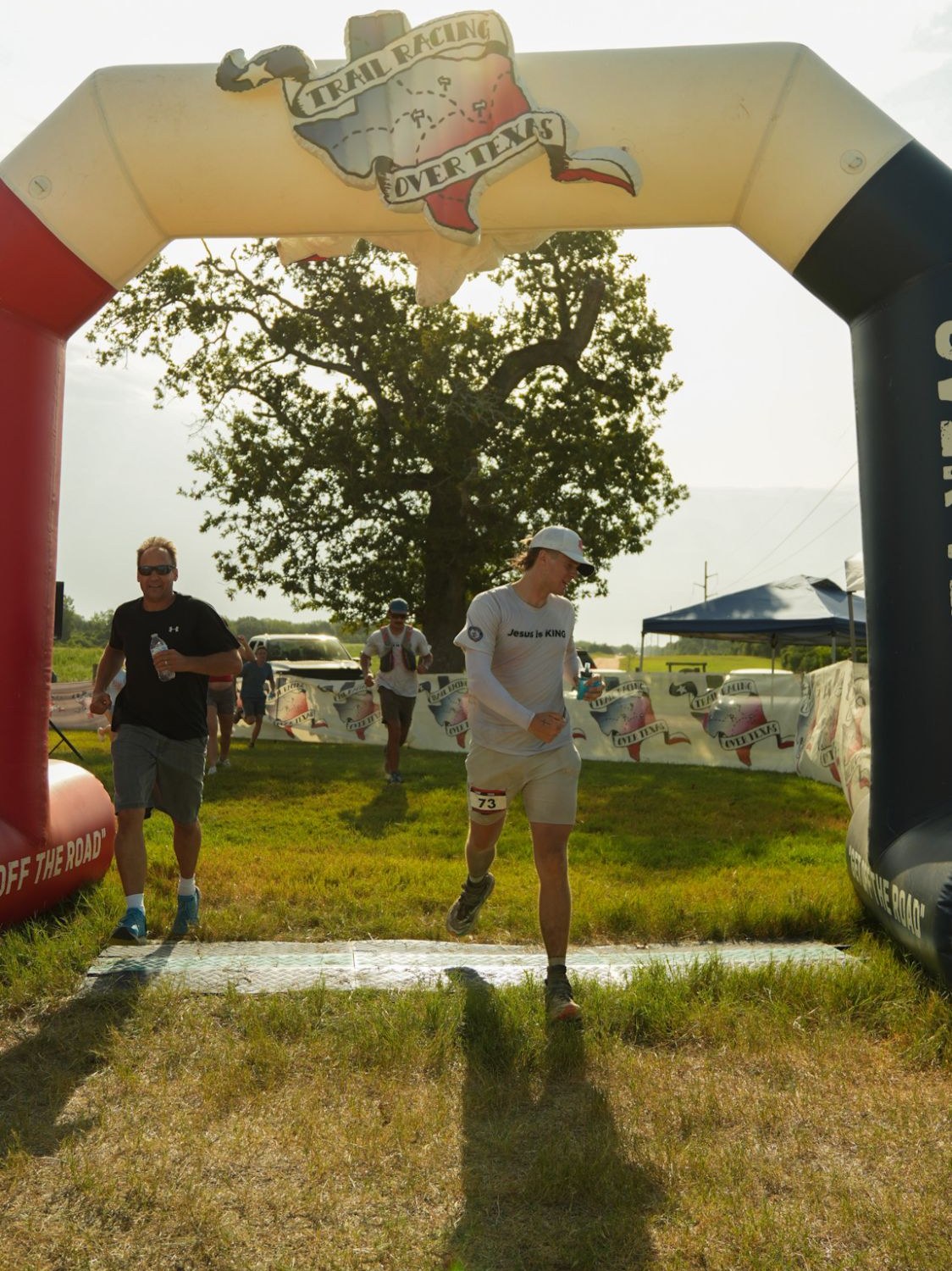
In August 2026, I ran the Habanero 100. The temperatures were over 100°, and the feels-like temperature peaked at 112°. I was drinking at least 40 to 48 oz of water per hour, which was a record high for me but totally necessary. I didn't get dehydrated despite the super high temperatures and went on to finish the race in third place.
The general advice is 16–32 oz per hour. My own sweat test report from Precision Hydration says very few runners can comfortably drink much more than 24 oz an hour, unless experience tells you otherwise. At Habanero, I needed almost double that. That's why you need your own number.
How to calculate your sweat rate
- Weigh yourself nude before you run. Use the same scale before and after.
- Run for one hour at your normal endurance effort, the pace you'd hold in your race. Keep track of everything you drink.
- Towel off and weigh yourself nude again as soon as you finish.
- Do the math. Subtract your end weight from your start weight. Every pound you lose is about 16 ounces of sweat. Add back the ounces you drank. That's your sweat rate per hour.
- Repeat it in different conditions. Hot, cold, humid, hilly. Jason Koop, head ultrarunning coach at CTS, recommends testing in roughly 10-degree steps.
- Formula: (start weight − end weight in pounds) × 16 + ounces you drank = ounces of sweat per hour
- Replacement rate: ounces of sweat per hour × 0.9 to 0.95 = how much to drink per hour
- Example: you lose 1.5 pounds and drank 12 oz. 1.5 × 16 = 24, plus 12 = 36 oz of sweat per hour. 36 × 0.9 = 32.4 and 36 × 0.95 = 34.2, so drink about 32–34 oz per hour
Why your sweat rate changes
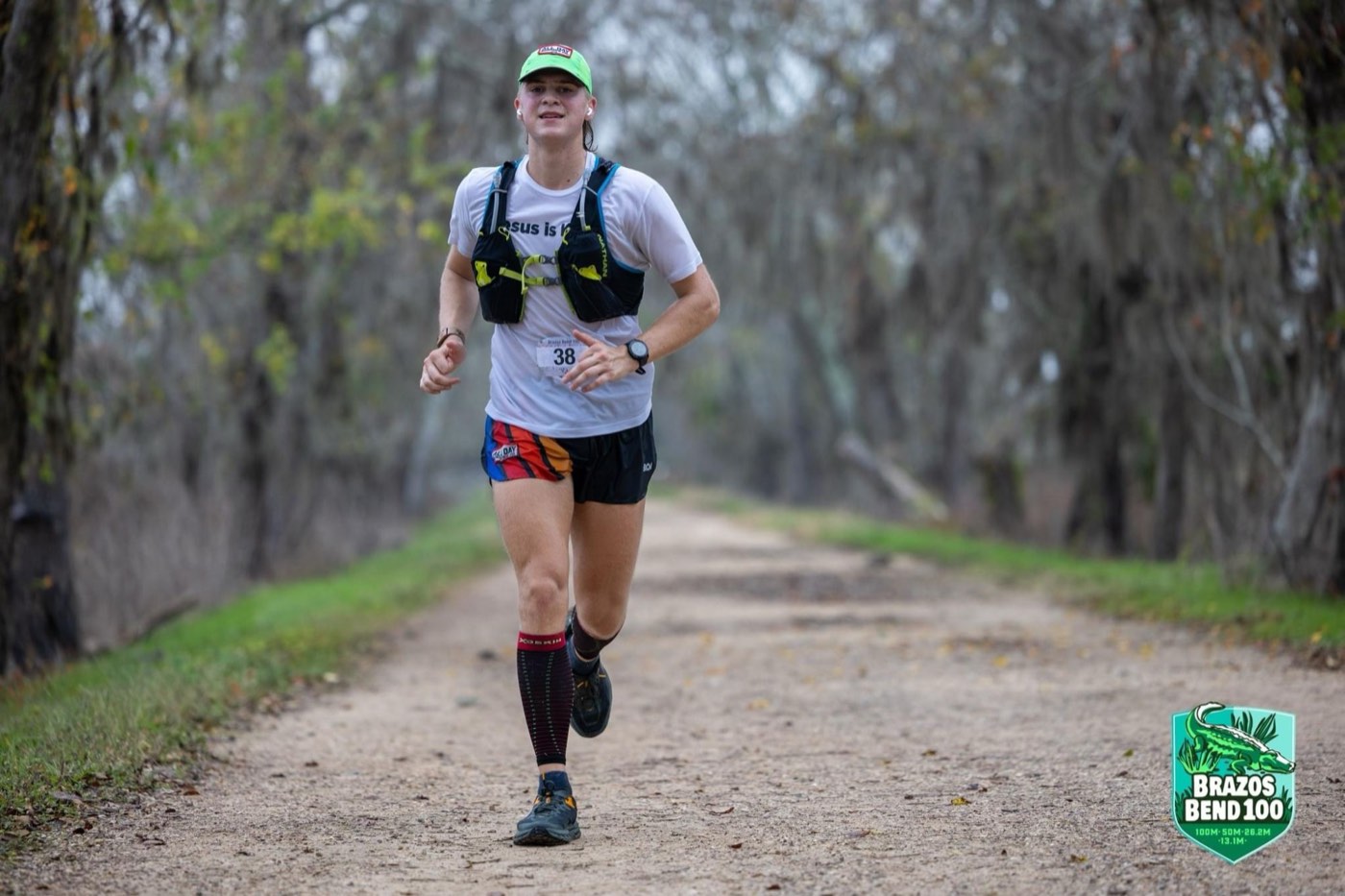
Your sweat rate isn't one number. Heat, humidity and how hard you're running all change it. When I ran the Brazos Bend 100 on December 3, 2022, it was 69 degrees with 100% humidity at the 6 a.m. start. That's a very different day than a cool, dry 69.
That's why one test isn't enough. Build a list of your sweat rates in different conditions, so before a race you can look at the forecast and know roughly how much you'll need each hour.
How much of your sweat to drink back
Don't try to replace all of it. Koop recommends drinking back about 90–95% of your sweat rate. Replacing 100% of your sweat in an ultra can lead to hyponatremia, or low blood sodium. Some of the weight you lose in a long race is also stored fuel you burn, not just sweat.
- Sweat rate 36 oz/hour: drink about 32–34 oz/hour
- Sweat rate 24 oz/hour: drink about 22–23 oz/hour
- Never: finish heavier than you started
Signs you're not drinking enough are thirst and a dry mouth. Signs you're drinking too much are feeling bloated, fluid sloshing around in your stomach, or needing to pee too often.
Practice it on your long runs so you're not trying to figure it out on race day. Your gut is trained just like your legs.
How to figure out your sodium
Weighing yourself tells you how much you sweat. It doesn't tell you how salty your sweat is. For that, you need a real sweat test, which measures how much sodium you lose. I highly recommend it. It takes the guesswork out of your hydration and electrolytes.
I did a Precision Hydration sweat test in March 2024. I lose 696 mg of sodium per liter of sweat, which makes me a low salt sweater.
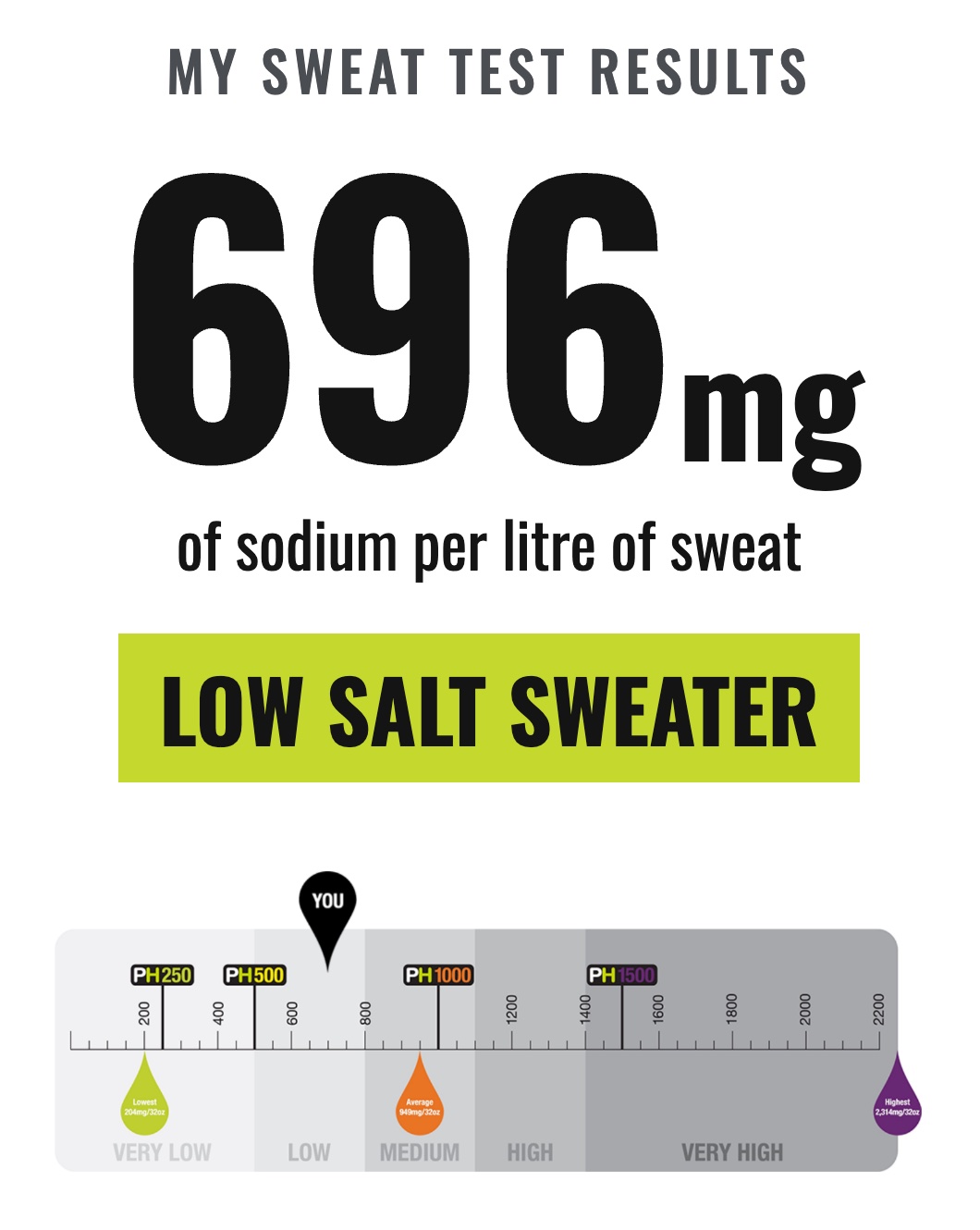
People vary a lot. According to CTS, sweat sodium ranges from about 400 to 2,000 mg per liter, with an average around 950. If you can't get a test, start with 600–800 mg of sodium per liter of fluid you drink. If you finish runs with white salt streaks on your hat or shirt, you're probably a salty sweater and should aim for the top of that sodium range.
My plan from the test:
- Before a race: a strong electrolyte drink (PH 1500) with 16 oz of water the evening before, and another a few hours before the start
- During a race: PH 500 in my bottles, or SweatSalt capsules with water at aid stations
- During training: PH 500
At a glance
| Step | What to do |
|---|---|
| 1. Weigh | Nude, before a one-hour run |
| 2. Run | One hour at race effort, tracking what you drink |
| 3. Weigh again | Towel off, nude, right after |
| 4. Math | Pounds lost × 16 + ounces drunk = sweat per hour |
| 5. Drink back | Sweat rate × 0.9 to 0.95, never more than you sweat |
| 6. Sodium | 600–800 mg per liter to start, or your sweat test number |
| 7. Repeat | In heat, cold and humidity |
I coach people to their first marathon and their first 100, fueling and hydration included. I'll build the plan around your life and be in your corner all the way to the finish line.
Apply for coachingKeep reading
- How much water should runners drink a day?
- What to eat during a long run
- What I wish I'd known before my first 100
- The 10 best purchases I've made for running
Common questions
How do I calculate my sweat rate?
Weigh yourself nude before a one-hour run, then towel off and weigh again after. Subtract your end weight from your start weight, multiply by 16 to get ounces, and add back whatever you drank. That's your sweat rate per hour.
How much of my sweat rate should I drink back?
About 90–95%, not 100%. Replacing all of it in an ultra can lead to hyponatremia, or low blood sodium. Never finish heavier than you started.
Does my sweat rate change?
Yes. Heat, humidity and intensity all change it. Test in different conditions and build a list of your numbers.
How do I know how much sodium I need?
A real sweat test measures how much sodium you lose per liter of sweat. If you can't get one, start with 600–800 mg of sodium per liter of fluid and aim higher if you see white salt streaks on your hat or shirt.
What's a normal sweat rate for runners?
It varies a lot from runner to runner and day to day. In extreme heat at the Habanero 100, I was drinking at least 40 to 48 oz an hour. Test yourself instead of guessing.
Sources: Jason Koop, CTS; Cliff Pittman, CTS; my Precision Hydration sweat test and hydration plan (March 2024).