
Do a 3-day carb load before any race a marathon or longer. Eat about 8–10 g of carbs per kg of body weight per day, from foods that are almost all carbs (rice, oatmeal, honey, applesauce, fig bars), with little fat, protein or fiber. Spread it over about 7 meals and snacks and track it. At about 180 lb, that's roughly 660 g of carbs a day for me. Get your number with my free carb loading calculator.
Why carb loading matters
Whether you're running a marathon or an ultramarathon, carb loading is essential. It maxes out your glycogen stores, the carbs stored in your muscles, so you can hold your pace and push back fatigue on race day. I carb load for any race a marathon or longer.
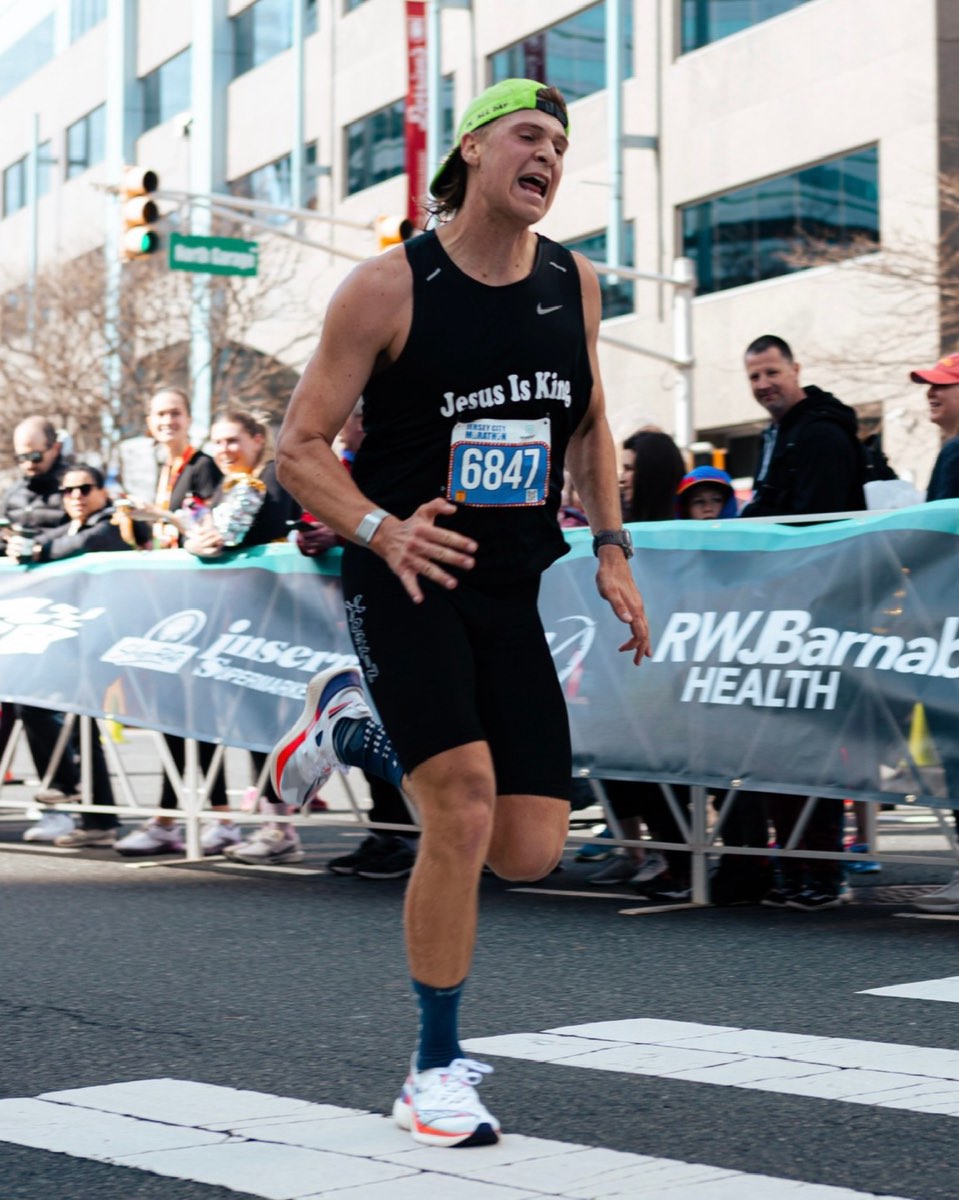
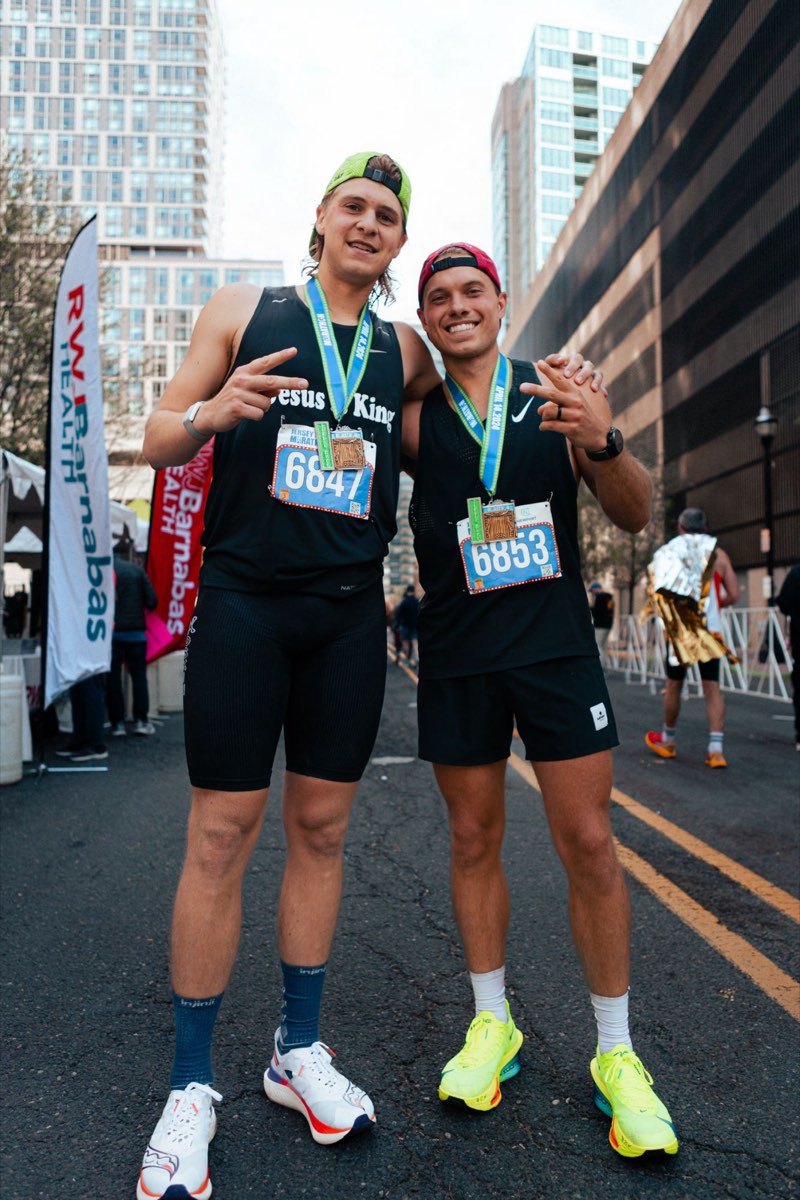
It took me until I was training for a 2:51 marathon at the 2024 Jersey City Marathon to learn the power of a proper carb load. Jeremy Miller, a friend of a good friend who's run a lot of fast marathons and has a big following on Instagram and YouTube, helped me with that build. He showed me what a real carb load looks like, and I haven't looked back since.
One thing to expect: your body stores water along with every gram of glycogen, so you'll probably feel a little heavier and see the scale go up a bit. That's the point. It's fuel, not fat.
Step 1: Calculate your carb target
Your daily target is based on your body weight:
- 3-day load: 8–10 g of carbs per kg of body weight per day
- 2-day load: 10–12 g per kg per day
I use the low end of the 3-day range: 8 g per kg. At about 180 lb (82 kg), that's about 660 g of carbs per day.
Use the carb loading calculator
Enter your weight and race, and it gives you your daily target, your range, and how much to eat at each meal.
Step 2: Do it over 3 days
I recommend a 3-day carb load. It's much easier to hit your target spread over three days than to cram it into two. Eating 600+ grams of carbs in a day is harder than it sounds.
I use pretty much the same carb load for a 100-miler as I do for a marathon. For a half marathon, a shorter 2-day load is all you need.
Step 3: Choose your carb sources
Pick foods that are almost all carbohydrate, with minimal fat and protein. Fat and protein slow digestion and make you feel heavy, and they fill you up before you hit your number. Also avoid high-fiber foods to prevent stomach issues on race day.
| Food | Carbs |
|---|---|
| Rice | 74 g per cup |
| Fig bar | 38 g each |
| Oatmeal | 38 g per serving |
| Applesauce | 26 g per serving |
| Orange juice | 26 g per cup |
| Apple juice | 28 g per cup |
| Bobo's bar | 25 g each |
| Honey | 17 g per serving |
Carb counts vary by brand and serving size, so check your labels.
Step 4: Drink some of your carbs
Eating 600+ grams of carbs a day from food alone can leave your stomach feeling heavy and bloated, and that's the last thing you want before a race. Liquid carbs are the easiest fix. Juice and carb drinks go down easily, digest quickly and don't fill you up the way solid food does, so they help you hit your number with a lot less GI stress.
- Add a glass of juice to your meals. Orange juice (26 g per cup) or apple juice (28 g per cup) is an easy 25+ grams.
- Use a carb drink mix between meals, like Maurten Drink Mix 160 (40 g per serving).
- Swap honey or a snack for a drink when you're getting full.
Bonus: you're drinking more fluid too, which you need anyway, since your body stores water along with every gram of glycogen.
Step 5: Build your plan and track it
- Plan your meals and snacks so you hit your target without too much fat or protein.
- Track your intake. I use Cal AI. You take a picture of your meal, and it estimates the carbs. It's fast and easy.
- Keep easy, portable snacks with you to fill the gaps throughout the day.
My exact carb load day: ~660 g
Here's a real day from one of my carb loads:
| When | What I eat | Carbs |
|---|---|---|
| 6:00 am | Coffee + 1 serving honey · 2 servings oatmeal + 2 servings honey | 127 g |
| 8:00 am | Fig bar · Bobo's bar | 63 g |
| 10:00 am | 4 eggs · 1 kiwi · 1 cup rice · 1 cup orange juice | 110 g |
| 12:00 pm | Bobo's bar · PB&J Bobo's bar | 64 g |
| 2:00 pm | ½ lb ground beef · 1 cup rice · 1 cup apple juice | 102 g |
| 4:00 pm | Fig bar · Bobo's bar · applesauce | 89 g |
| 6:00 pm | ½ lb ground beef · 1 cup rice + 2 servings honey | 108 g |
| Total | 663 g |
Notice the pattern: I eat every two hours, almost everything is carbs, and the protein (eggs and beef) is lean and simple. Honey is my secret weapon. It's an easy way to add carbs to almost anything. And I drink some of my carbs (OJ with brunch, apple juice with lunch) to keep my stomach happy.
Is carb loading worth it for a 100-miler?
Yes, but it's worth being honest about what it does and doesn't do over 100 miles.
- The research behind carb loading comes mostly from shorter events. Studies show it improves performance in endurance events longer than about 90 minutes, with most of the research on marathon-length efforts. There's very little research done specifically on 100-milers.
- Your glycogen runs out within hours either way. In a 20- to 30-hour race, no carb load lasts the whole day. What you eat during the race matters far more. That's why I practice fueling on every long run.
- Ultra pace burns more fat. At the slower effort of a 100, your body relies more on fat and less on carbs than in a marathon, so carb loading matters a little less than it does for a marathon.
- Overdoing it can backfire. Stomach problems are one of the most common reasons runners drop out of ultras, and forcing down huge amounts of food, especially high-fiber food, makes them more likely. That's why I stick to low-fiber, mostly-carb foods.
- You'll carry a little extra water weight. Each gram of stored glycogen holds about 3 grams of water, so a full load can add a couple of pounds. Some see that as a downside on climbs, others as a built-in hydration reserve.
- Going low-carb isn't the answer either. Some ultrarunners train on low-carb, high-fat diets. Research shows they burn a lot of fat, but it hasn't shown they race better, and some studies found those diets made athletes less efficient at race effort.
My take: there's no evidence carb loading hurts a 100-miler, and starting topped off is a simple, low-risk edge. Just don't overdo it, keep the fiber low, practice it before a big race, and remember that fueling during the race is what gets you to the finish.
Race morning
On race morning, eat about 1–2 g of carbs per kg of body weight, 2–3 hours before the start. For me, that's roughly 80–165 g.
I keep it simple with Maurten: a Drink Mix 160 and a Solid 160 bar, 40 g of carbs each, for 80 g. If you want more, add a second serving or some oatmeal with honey. Whatever you choose, stick with easy-to-digest foods you've practiced with in training. Then fuel early and often once the race starts. Here's how I fuel during a 100.
DM me "CARB LOAD" on Instagram and we'll build yours together. Or apply for coaching, and I'll dial in your fueling for your whole training block and race day.
DM me "CARB LOAD" See if you qualifyThis is general education, not medical advice. If you have diabetes or any medical condition, talk with your doctor or a registered dietitian before carb loading.
Common questions
How many carbs should I eat when carb loading for a marathon?
About 8–10 g per kg of body weight per day over 3 days. At about 180 lb, I eat around 660 g a day (8 g/kg).
How many days should I carb load?
Three for a marathon or longer. It's much easier to hit your target over three days than to cram it into two. For a half marathon, two days.
Do you carb load differently for a 100 than for a marathon?
No. I use pretty much the same 3-day carb load for both.
Is carb loading worth it for a 100-miler?
Yes, but it matters less than for a marathon. Your glycogen runs out within hours either way, so fueling during the race matters most. Carb load sensibly, keep the fiber low and don't overdo it.
What are the best foods for carb loading?
Foods that are almost all carbs, with little fat, protein or fiber: rice, oatmeal, honey, applesauce, orange juice, fig bars and Bobo's bars.
What should I eat on race morning?
About 1–2 g of carbs per kg of body weight, 2–3 hours before the start. I use a Maurten Drink Mix 160 and a Solid 160 bar, which is 80 g of carbs.
More on fueling and race prep: the complete guide to your first 100-mile race and the 100-mile race gear checklist.