Pre-tape your old hot spots with Leukotape, put Salty Britches on your feet, wear Injinji toe socks, change your socks about every 25 miles and your shoes every 50, and change your socks after your feet get soaked.
Blisters can make or break your entire race. Thankfully, I have learned to prevent most of them. I didn't have a single one during the Habanero 100 in August 2026. Temperatures peaked at 105°, and the feels-like temperature reached 112°.
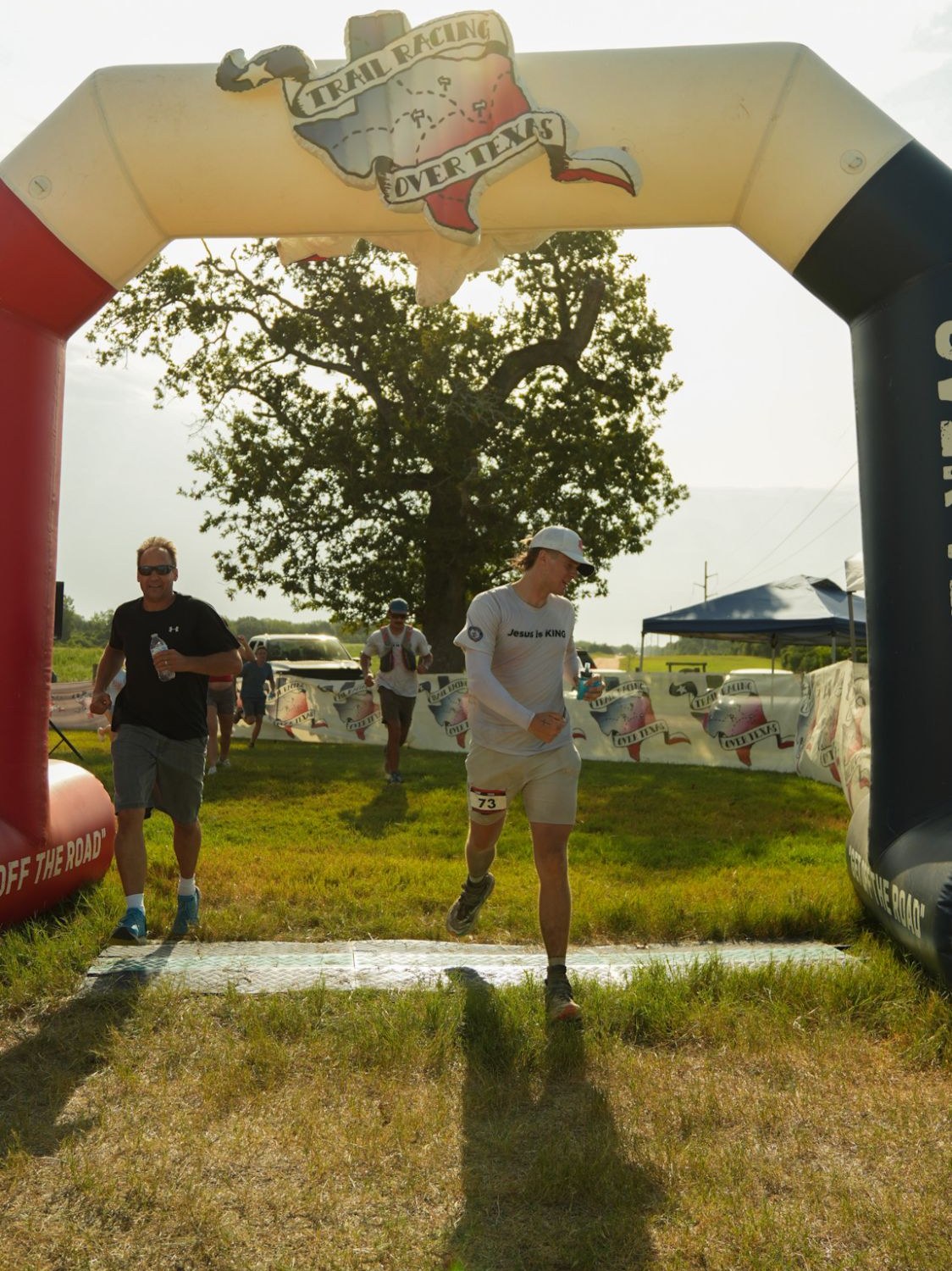
But it wasn't always that way.
I had some really bad blisters when I did the Triple Crown of 200s in 2023.
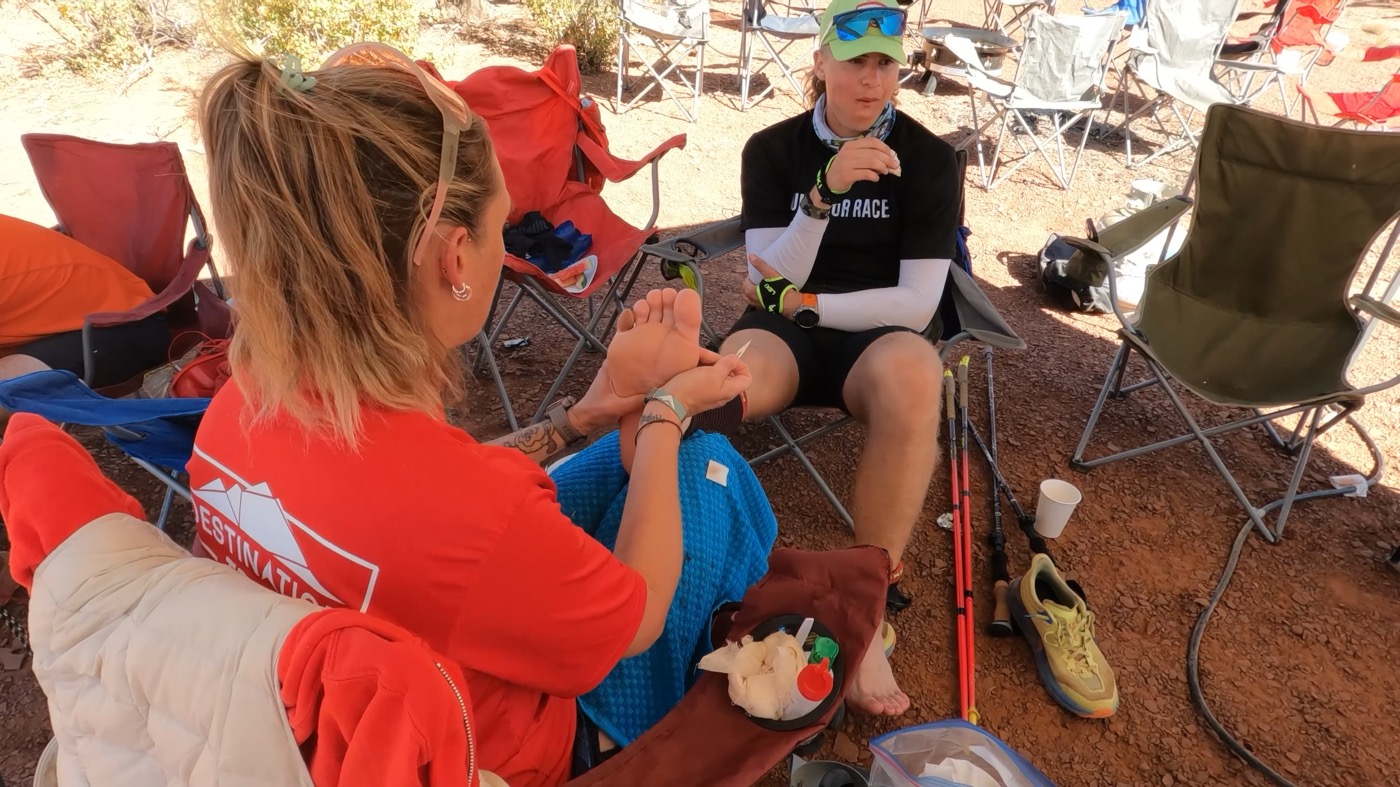
Here's the routine I use now.
1. Pre-tape your hot spots with Leukotape
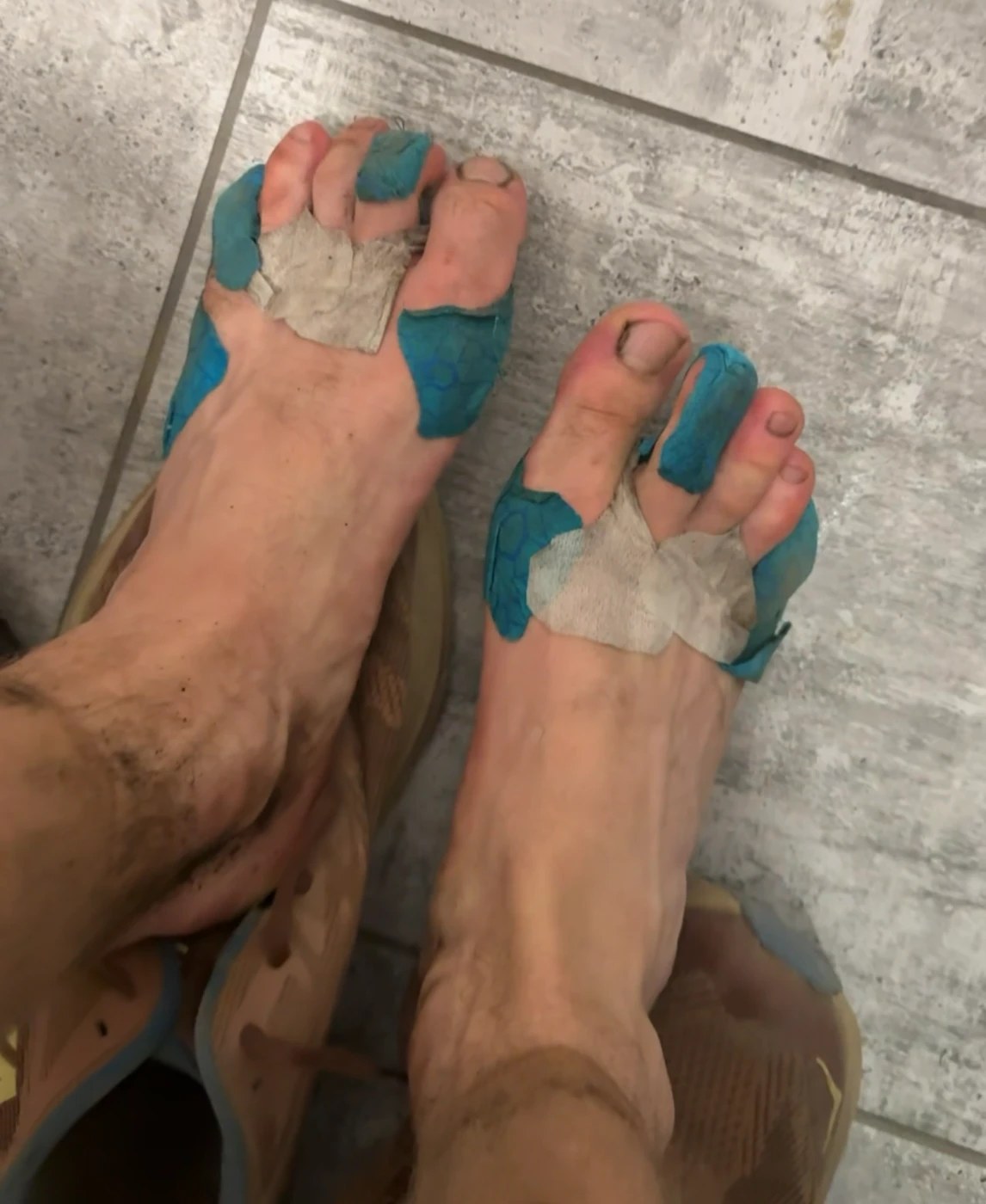
Before the race, I pre-tape certain spots where I have gotten blisters or hot spots in the past with Leukotape.
2. Put Salty Britches on your feet
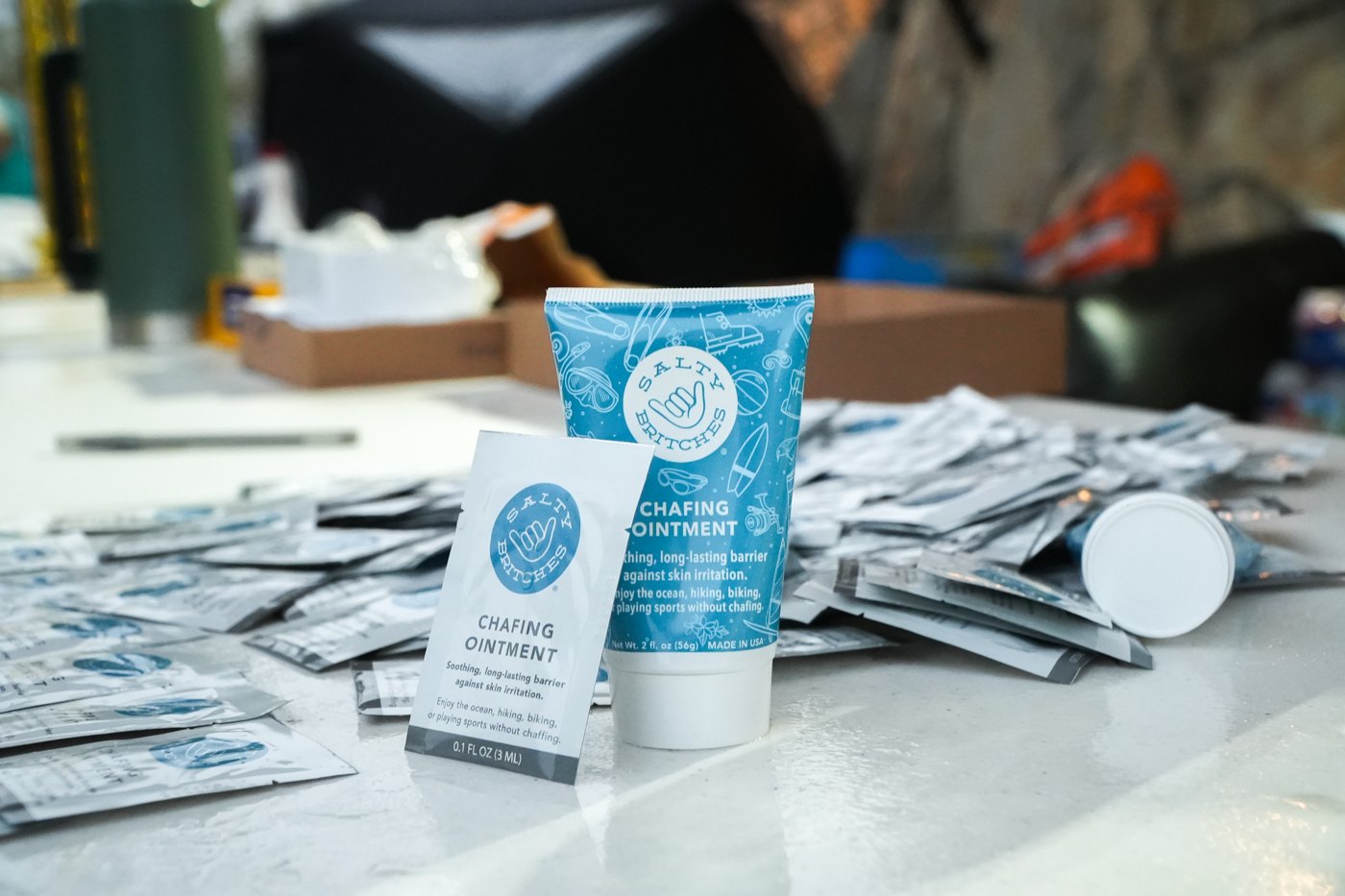
I put Salty Britches on my feet.
I first discovered this at 29029. Before the event, they had different speakers give advice, and one of them was Chadd Wright, a former Navy SEAL. He said he put Salty Britches on his feet to help him not get blisters. Right from there, I was like, "I need to try this stuff."
Get Salty Britches (code RUNYOURRACE) →
3. Wear Injinji toe socks
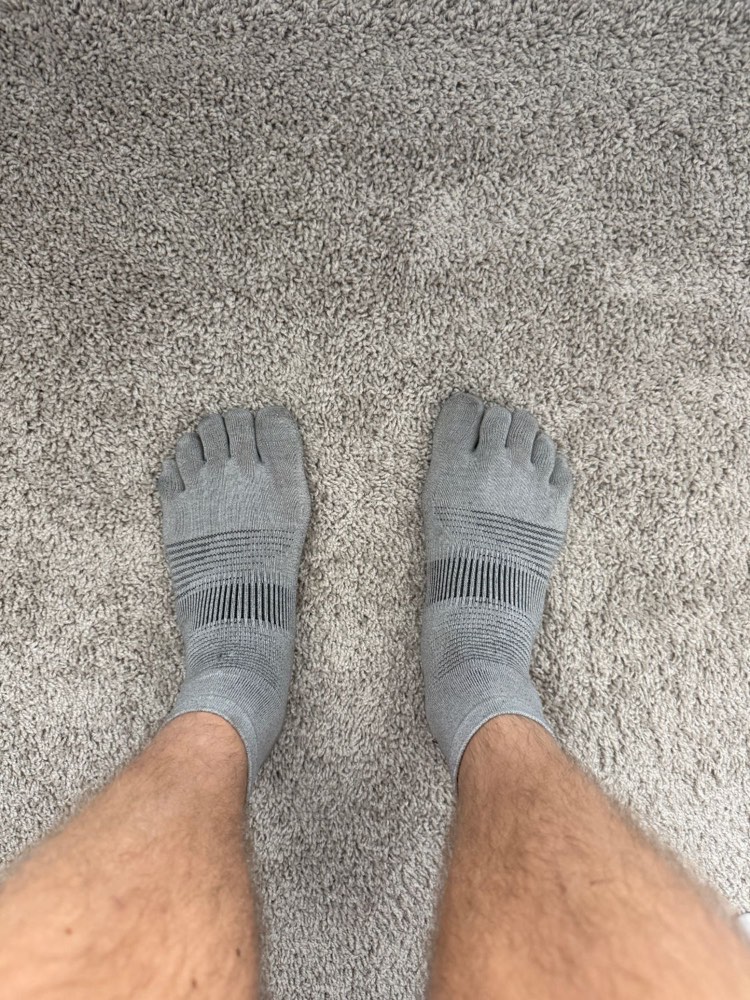
I wear Injinji toe socks. They look weird, but they protect your toes.
4. Change your socks about every 25 miles
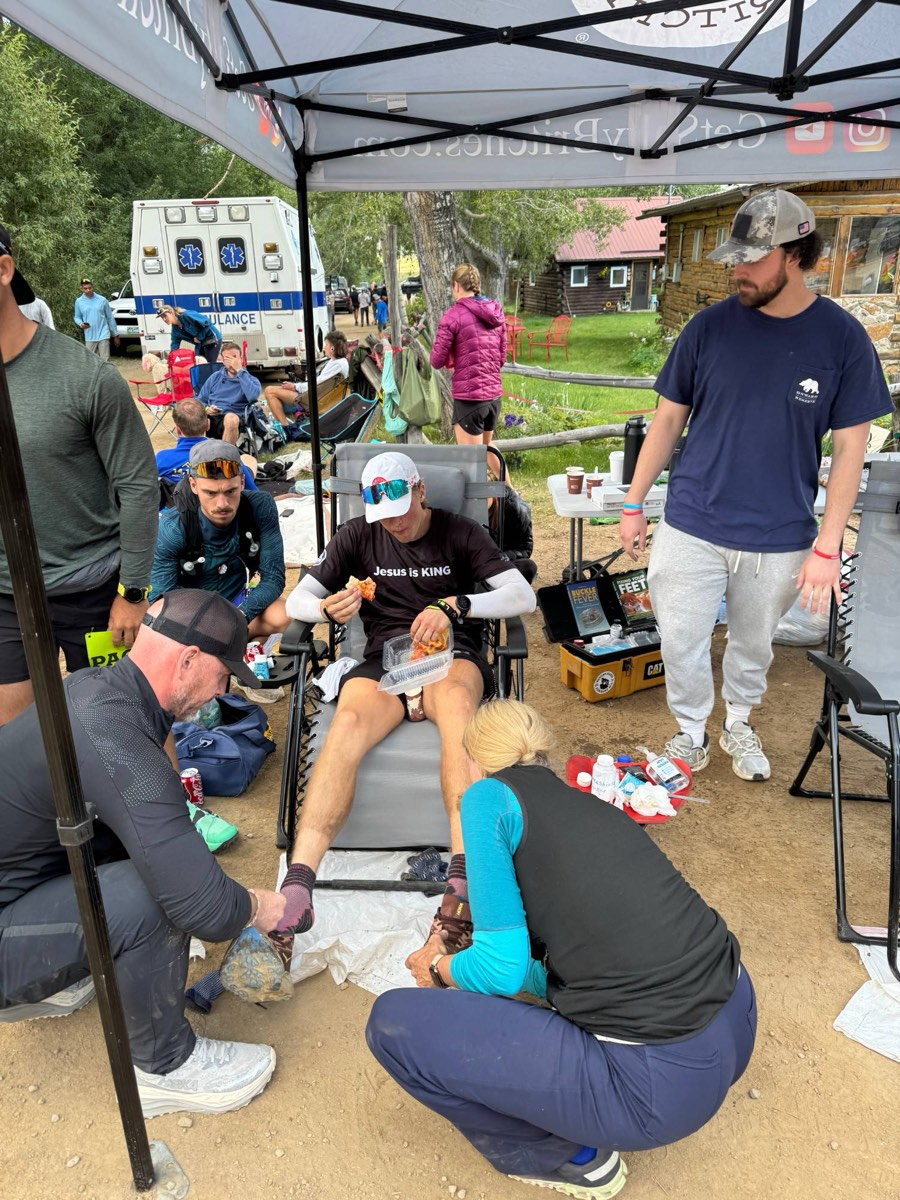
I will change my socks about every 25 miles.
5. Change your shoes every 50 miles
I'll change my shoes every 50 miles.
If you have a crew or drop bags, plan your sock and shoe changes around those aid stations. Here's how I plan aid station stops for a 100.
What to do when your feet get wet
Sometimes you just can't deal with it. But if you can change your socks after your feet get super wet, that is helpful.
Summary: my blister prevention routine
| Step | What I do | When |
|---|---|---|
| 1 | Pre-tape old blister and hot spots with Leukotape | Before the race |
| 2 | Salty Britches on my feet | Before the race |
| 3 | Injinji toe socks | The whole race |
| 4 | Change socks | About every 25 miles |
| 5 | Change shoes | Every 50 miles |
| Wet feet | Change socks | When you can |
Building your race kit? Here's my 100-mile race gear checklist and the trail running gear I actually use.
Some links are affiliate links. I only recommend gear I actually use.
I coach people to their first marathon and their first 100-miler. If you want a plan built for you, apply for coaching.
Apply for coachingCommon questions
How do you prevent blisters in an ultramarathon?
Pre-tape spots where you've had blisters or hot spots before with Leukotape, put Salty Britches on your feet, wear Injinji toe socks, change your socks about every 25 miles and your shoes every 50 miles.
How often should you change socks in an ultramarathon?
I change my socks about every 25 miles and my shoes every 50 miles. If my feet get super wet, I change my socks when I can.
What tape is best for preventing blisters?
I use Leukotape. I pre-tape spots where I've had blisters or hot spots in the past before the race starts.
Do toe socks prevent blisters?
They help. Toe socks keep your toes from rubbing against each other. I wear Injinji toe socks.