Go to ultrasignup.com, tap Find a Race, allow your location, then filter by race distance and how far you're willing to travel. You'll get a list of every ultra near you, sorted by distance from you, with dates. It takes about five minutes, and you can do it right from your phone.
I've finished seven 100-milers, including Leadville twice, and three 200-milers: the Tahoe 200, the Bigfoot 200 and the Moab 240. But before my first 100, I had no idea where to even find a race. So I mapped out a 1-mile loop around my neighborhood and ran it 100 times.
I wish someone had shown me this first. Here's exactly how I find my next ultramarathon.
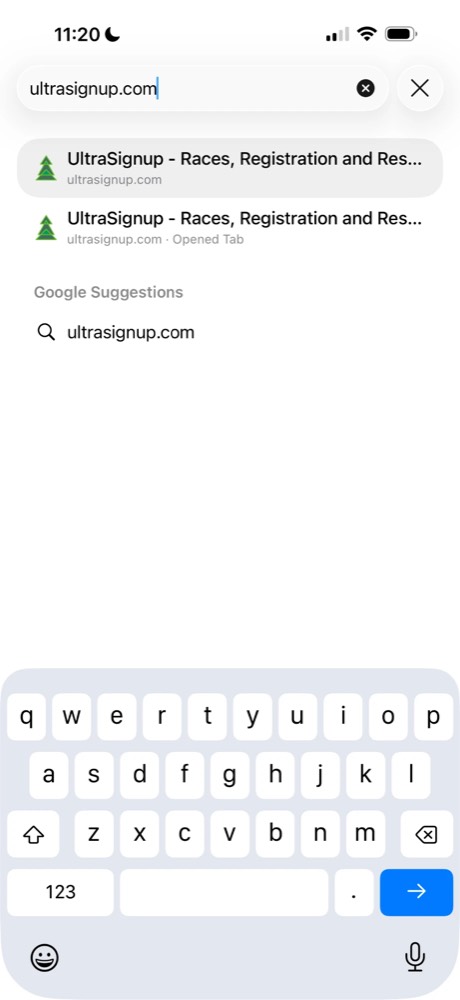
Step 1: Go to UltraSignup
Search ultrasignup.com in your browser. UltraSignup is where most ultramarathons in the US handle registration and post their results, so it's the best single place to see what's out there.
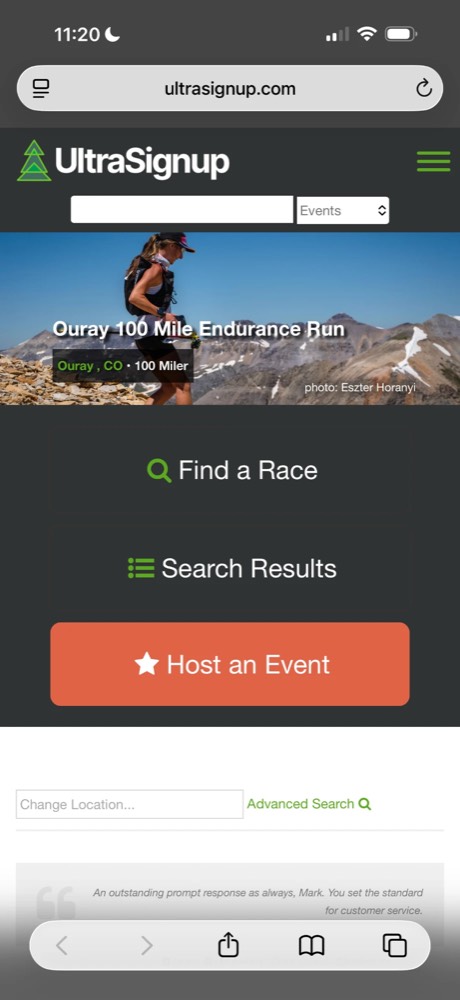
Step 2: Tap "Find a Race"
On the home page, tap Find a Race.
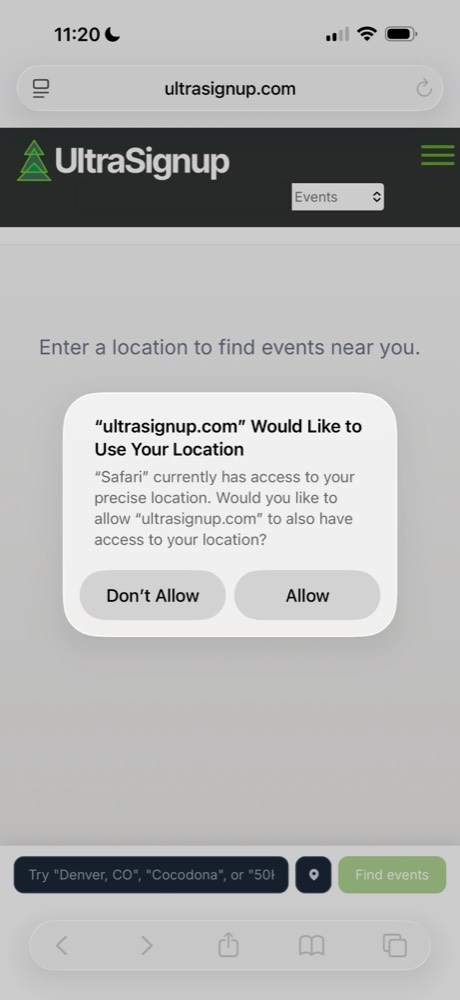
Step 3: Allow your current location
When your phone asks whether UltraSignup can use your location, tap Allow. If you'd rather not share it, or you want to search somewhere else, type a city into the search bar at the bottom instead.
Step 4: Choose the distance you're going for
Tap Race distance and pick what you want to run. You can select more than one. The options run from under 10 miles up to over 110 miles, including 26–40 mi (50K), 41–60 mi (50 miles) and 91–100 mi (100 miles). There's also a Duration filter for timed races, like 24-hour events.
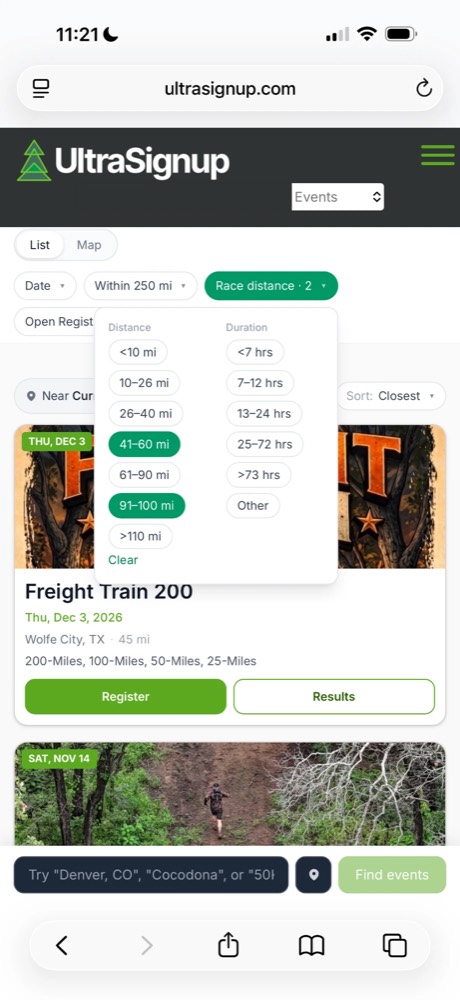
Not sure which distance is next for you? The progression I use with athletes is half marathon, marathon, 50K, 50 miles, 100K, then 100 miles. Pick the next step up from your longest race.
Step 5: Set how far you're willing to travel
Tap the Within filter and choose a radius: 25, 50, 100, 250 or 500 miles. Be honest with yourself here. A race you can drive to is cheaper, easier to crew and easier to scout.
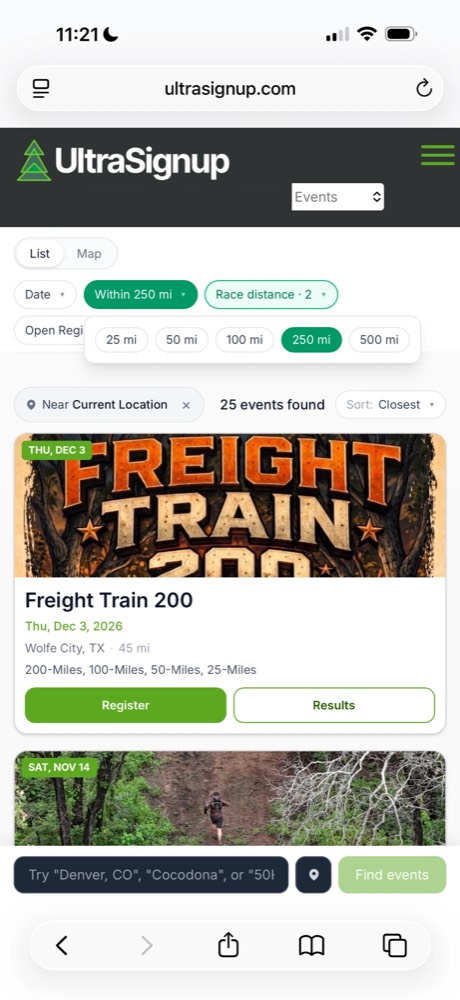
The results are sorted by closest by default. You can also switch to Map view, filter by Date, or show only races with open registration.
Step 6: Scroll and pick the one that's best for you
Each race in the list shows its date, location, how far it is from you and every distance offered. This is where you narrow it down.
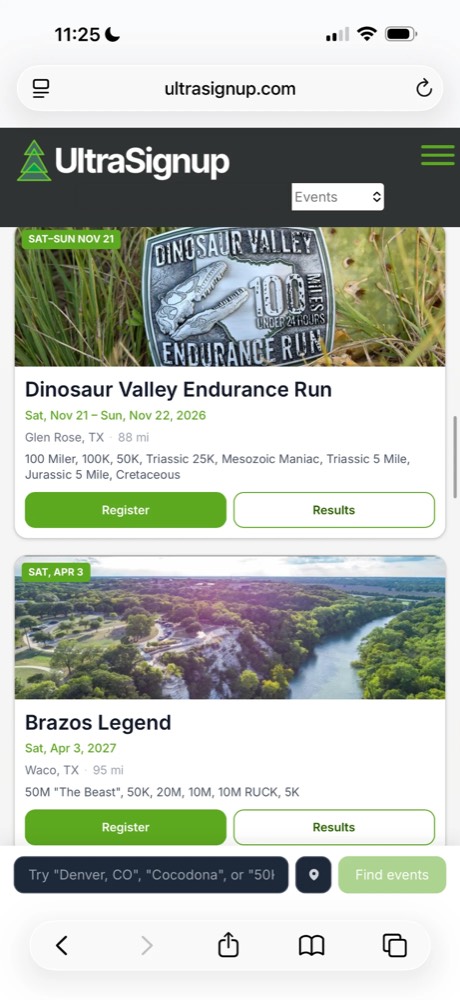
Once you've got a few options, I recommend switching to your computer. You'll usually register through UltraSignup, but most races also have their own website with the course map, elevation profile, aid stations and rules. Comparing all of that is a lot easier with a few tabs open than on your phone.
How I decide which ultra to run
Finding races is the easy part. Picking the right one is what sets you up to finish. These are the factors I look at:
- What excites you most? You'll train for this race for months. Pick one you genuinely want to run.
- Elevation gain. Less climbing means more of the race is runnable.
- Temperature. Heat and cold both change everything about race day, from your fueling to your gear.
- Cutoff times. More hours means more margin for a bad patch.
- Altitude. Racing near sea level is a lot easier than racing up high.
- Terrain. Smooth trail or a rail trail is very different from rocky, technical singletrack.
- The date. Make sure it gives you enough time to train.
For a deeper look at each factor, plus five races I recommend, read the best 100-mile races to get your first buckle.
How much time do you need?
It depends on what your training looks like right now. But I think most people who have run a marathon can train for a 100-mile race in 12 to 18 months. Count back from the race date and make sure the timeline works. Here's how to train for your first 100 while working full time.
Pro tip: check the real cutoff in the results
Tap Results on any race and look at the slowest official finishers from the most recent year. If the last finishers came in just under 32 hours, the cutoff is 32 hours. It's a quick way to confirm what you're working with, and to see how many people actually finish.
I'll build your plan backward from race day, around your calendar, and handle the fueling, gear and blood work. You show up and run.
See if you qualifyCommon questions
How do I find ultramarathons near me?
Go to ultrasignup.com, tap Find a Race, allow your location, then filter by race distance and how far you're willing to travel. You'll see every ultra near you, with dates and distances.
What is UltraSignup?
UltraSignup is the website most ultramarathons in the US use for registration and results. You can search races by location, distance and date, register, and look up past results.
How far in advance should I sign up for a 100-mile race?
Most people who have run a marathon need 12 to 18 months to train for a 100. Pick a race date that gives you that runway.
How can I check a race's real cutoff time?
Tap Results on the race and look at the slowest official finishers from the most recent year. If they came in just under 32 hours, the cutoff is 32 hours.
Once you've signed up, here's the gear you'll need on race day.